Top Waterproof Chargers for Global Buyers?

Time:2026-09-07 Author:Henry
0%

Choosing a reliable Waterproof Charger requires more than trusting a bold product label. Global buyers need protection, charging speed, compatibility, and dependable after-sales support. A charger may survive rain yet fail after saltwater exposure or repeated drops. That distinction matters.

This guide examines models designed for travel, outdoor work, marine activities, and emergency use. It considers sealed ports, IP ratings, corrosion resistance, thermal control, battery capacity, and USB-C performance. Real-world details matter. A charger in a wet backpack should remain usable after several hours of movement. Its buttons should respond with cold or damp fingers. Its cable connection should not loosen easily.

Testing claims also deserve careful attention. IP certification can describe specific laboratory conditions, not every situation buyers may encounter. A device rated for temporary immersion may still need careful drying before recharging. I have found that product manuals often explain these limits better than advertisements. Still, manuals can be vague. That is worth questioning.

The comparisons in this article focus on practical evidence, manufacturer documentation, independent testing, and user experience. Models will be assessed for different budgets and travel needs, rather than ranked by marketing language alone. Global availability, regional plugs, warranty coverage, and replacement policies will also influence the recommendations. A strong charger should deliver consistent power without creating unnecessary safety concerns. It should also be easy to inspect, clean, and store. No charger is perfect. Careful selection remains essential.
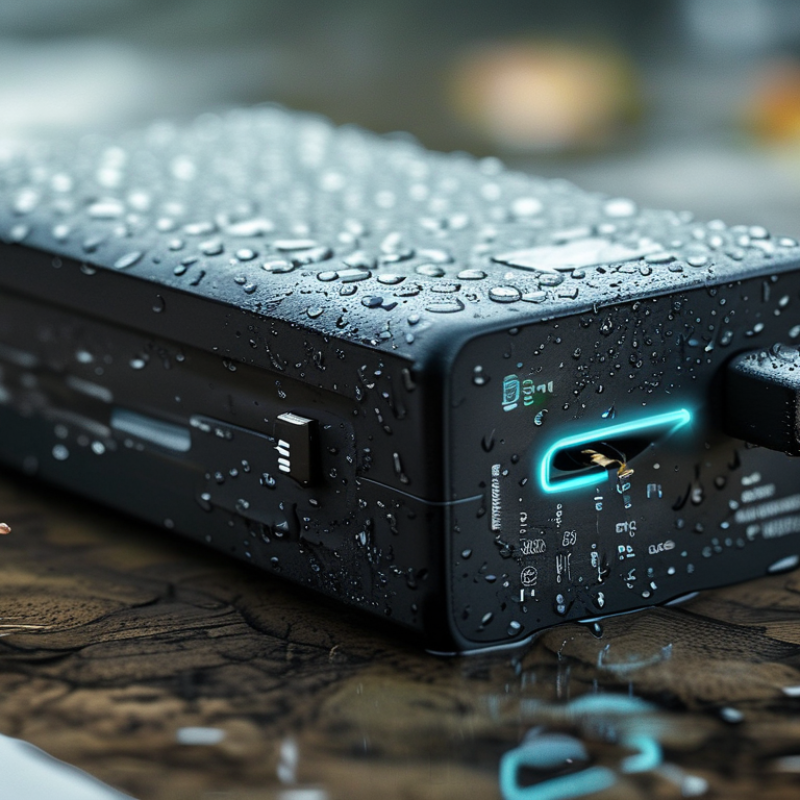
Top Waterproof Chargers for Global Buyers?

What Makes a Charger Truly Waterproof?

A truly waterproof charger needs more than a sealed-looking case. The IP code, defined by IEC 60529, shows tested protection levels. IPX4 resists splashes, while IPX7 covers temporary immersion up to one metre for 30 minutes. IPX8 requires a manufacturer-defined immersion test. The number matters.

The connector is often the weak point. Look for covered ports, tight gaskets, corrosion-resistant contacts, and reinforced cable joints. A charger may survive rain but fail after saltwater exposure or repeated bending. It should also control heat during high-power use. Sealing can trap heat. That detail is easy to miss. Never connect or operate a wet charger, even when its enclosure carries a high rating.

The Global E-waste Monitor 2024 reported 62 million tonnes of electronic waste in 2022, with only 22.3% formally collected and recycled. Longer-lasting chargers can reduce replacement waste, but durability claims need evidence. Ask for independent IP test records, temperature data, and clear cleaning instructions. I remain cautious when a product says “waterproof” without identifying the tested port, cable, or conditions. Marketing language is not a test result. A careful buyer should also check whether the rating applies after cable movement, aging, and seal wear. That information is often missing.

Key Waterproof Ratings and International Safety Standards

A waterproof charger should be judged by its rating, not by the word “waterproof” on its packaging. The IP code follows IEC 60529 and has two digits. The first measures dust protection. The second measures water resistance. IP67 means full dust protection and temporary immersion in one metre of water for up to 30 minutes. IP68 allows deeper or longer immersion, but the manufacturer must state the exact conditions.

I used to treat IP68 as a universal promise. That assumption was wrong. Test conditions differ, and saltwater, soap, and high-pressure spray can damage seals faster than fresh water. Check whether the rating applies to the complete charger, cable connection, and charging port cover. A loose flap can matter more than a printed certificate. Look for laboratory reports, testing dates, and clear immersion limits. Vague claims deserve caution.

Electrical safety also matters for international buyers. A reputable charger should show compliance with relevant product standards, such as IEC 62368-1 for audio, video, and information technology equipment. Regional conformity marks may support market access, but they do not replace independent testing. Verify input voltage, plug compatibility, over-current protection, and temperature control before purchase. Keep it dry while charging.

Small details matter. Condensation can remain inside. Inspect the connector after outdoor use, and stop using the unit if corrosion, swelling, or unusual heat appears. No rating lasts forever. Drop damage, worn seals, and repeated bending can quietly reduce protection.

Main Types of Waterproof Chargers for Global Buyers

Waterproof chargers come in several practical forms for global buyers. Sealed USB wall chargers suit bathrooms, workshops, and outdoor cabins. They usually need a protective port cover and a tested IP rating, such as IP67 or IP68. However, the rating may apply only to the casing, not the charging socket. Check the product test report before trusting the claim.

Waterproof power banks are useful for hiking, boating, and emergency travel. Some include built-in cables, while others use covered USB ports. Solar charging models offer independence in bright weather, but their output can drop sharply under clouds. Vehicle and marine chargers provide stable power for motorcycles, boats, and outdoor equipment. Wireless waterproof pads are convenient, although water, dirt, or thick cases can interrupt charging. Fast charging also creates more heat, which may reduce performance inside a sealed enclosure.

Tips: Match the plug and voltage to your destination. Confirm USB output, battery capacity, and charging speed. Saltwater is more damaging than freshwater. Rinse exposed equipment carefully, then dry every port. Never charge a wet device, even with a waterproof charger. I would also avoid trusting vague words like “rainproof.” Real protection depends on seals, testing, cable fit, and long-term wear. Manufacturers can improve these details, but buyers still need to inspect them.

Top Waterproof Chargers for Global Buyers? - Main Types of Waterproof Chargers for Global Buyers

Charger Type Typical Water-Resistance Level Typical Output Range Best Use Case Main Advantages Important Limitations Global Buyer Considerations
Rugged Portable Power Bank Commonly IP65 to IP68, depending on the model 10 W to 100 W USB output; approximately 5,000 mAh to 30,000 mAh capacity Travel, hiking, field work, marine activities, and emergency backup Portable, rechargeable, and suitable for charging phones, cameras, GPS devices, and other USB equipment Heavy rain or immersion may still require sealed port covers; capacity decreases in very cold conditions Check battery transport rules, watt-hour labeling, plug-free USB compatibility, and local import requirements
Water-Resistant Wall Charger Usually IP44 to IP65 for protected outdoor installations 18 W to 140 W USB-C Power Delivery; some models also include USB-A ports Covered patios, workshops, garages, hotels, and sheltered outdoor charging points Fast charging, stable mains power, and support for multiple device types Not normally designed for direct water jets, standing water, or use with wet connectors Select the correct plug format, input voltage range, safety certification, and frequency rating for the destination market
Outdoor USB Charging Station Typically IP54 to IP66 when correctly installed 5 W to 65 W per USB port; total output varies by configuration Public areas, campsites, transport facilities, hospitality venues, and commercial sites Supports several users, can be wall-mounted or pedestal-mounted, and is suitable for fixed installations Requires professional installation, protection from unauthorized access, and regular inspection of ports Review electrical codes, residual-current protection, enclosure requirements, maintenance access, and language labeling
Water-Resistant Car Charger Often IP54 or protected by a vehicle-mounted enclosure 12 W to 100 W USB output, depending on the vehicle power system and charger design Cars, vans, boats, utility vehicles, and mobile service fleets Convenient in-vehicle charging and compatibility with common 12 V or 24 V electrical systems Vehicle sockets may not be waterproof; power delivery depends on the vehicle circuit and fuse rating Verify input voltage, connector dimensions, fuse protection, regional vehicle standards, and installation conditions
Water-Resistant Wireless Charging Pad Usually splash-resistant rather than fully waterproof; commonly IPX4 to IPX7 in specialized designs 5 W to 15 W for common wireless phone charging; higher ratings require device and charger support Bedside areas, boats, kitchens, bathrooms, and sheltered hospitality environments No exposed charging connector during normal use and convenient alignment-based charging Charging efficiency can drop with misalignment, thick cases, heat, metal objects, or moisture between surfaces Confirm wireless charging compatibility, regional power adapter requirements, thermal protection, and cleaning instructions
Solar USB Charger Commonly IP65 to IP67 for outdoor use Approximately 5 W to 30 W from compact portable panels; real output varies with sunlight Camping, remote travel, disaster preparedness, and off-grid field operations Uses renewable energy, works away from mains power, and can charge USB devices during daylight Cloud, shade, panel angle, and seasonal sunlight can significantly reduce charging speed Compare tested output rather than rated peak output, and check regional solar conditions and battery-storage options
Marine-Grade DC Charger Often IP67 to IP68 with corrosion-resistant housing 12 V or 24 V input; commonly 10 W to 100 W USB output Boats, docks, marine equipment, and high-humidity industrial environments Designed for vibration, salt-air exposure, moisture, and DC electrical systems Higher purchase cost and more demanding installation; corrosion protection does not eliminate maintenance needs Check marine electrical standards, galvanic-corrosion protection, cable length, fuse sizing, and enclosure materials

Note: IP ratings describe protection against solid particles and water under specified laboratory conditions. A higher rating does not mean that a charger can be used safely with wet connectors, while submerged, or outside the manufacturer's operating instructions.

How to Compare Performance, Compatibility, and Durability

For global buyers, waterproof charging claims need careful separation from charging performance. The IEC 60529 standard defines IPX7 as temporary immersion up to one metre for 30 minutes, under controlled laboratory conditions. It does not prove safe charging while wet. Moisture can remain inside a port after the exterior feels dry. I would inspect the sealing flap, cable exit, and charging contacts before comparing power output. Small gaps matter.

Compatibility depends on both power negotiation and regional electricity systems. The USB-IF USB Power Delivery 3.1 specification supports charging up to 240 watts, but every device still requests its own safe power level. A high wattage label alone proves little. Check USB-C support, voltage ranges, plug standards, and included adapters. Independent testing should confirm heat control at 80% or higher load. A cooler charger is usually more trustworthy. However, published laboratory results may not reflect sand, saltwater, or repeated drops.

Durability requires more than an IP code. IEC 60068 environmental test methods cover vibration, shock, humidity, and corrosion exposure, yet manufacturers may select only limited tests. Ask for test conditions, cycle counts, and temperature ranges. Look for over-current, over-voltage, and short-circuit protection. I once underestimated cable strain; the housing survived, but the connector loosened after repeated bending. That weakness is easy to miss. Data from USB-IF and IEC standards provides a stronger comparison than marketplace reviews, although neither replaces independent testing.

Regional Power Requirements and Smart Buying Criteria

Global buyers should treat waterproof charging as a regional power decision, not only a durability purchase.

Household voltage commonly ranges from 100 to 240 volts, while grid frequency may be 50 or 60 hertz. IEC 60038 lists these regional supply systems. A charger must support the local input range clearly. Plug shape matters too. An adapter that fits physically may still lack proper grounding.

Check the label before checking the waterproof claim. USB Power Delivery can reach 240 watts under the current USB-IF specification, but many travel devices need far less. Higher output can create heat inside sealed enclosures.

IP ratings, defined by IEC 60529, distinguish water resistance from full immersion protection. IPX4 handles splashes. IP67 involves temporary immersion under specified conditions. Neither rating excuses charging with wet ports.

Electricity access also affects practical buying choices. The Tracking SDG 7 report states that about 685 million people lacked electricity access in 2022. In some regions, unstable power makes surge protection and thermal control more valuable than extreme wattage.

Look for broad voltage input, replaceable regional plugs, safety certification, and a sealed port cover. Test the fit with your actual cable.

Small details fail first. A universal design sounds convenient, yet it may compromise grounding, repairability, or heat dissipation. That trade-off deserves more scrutiny.

FAQS

: What does a waterproof charger rating actually mean?

: The IP code reports tested dust and water protection. “Waterproof” alone proves very little.

What is the difference between IPX4, IPX7, and IPX8?

IPX4 resists splashes. IPX7 supports immersion up to one metre for 30 minutes. IPX8 requires stated manufacturer conditions.

Does IP67 protect the entire charger?

Not always. Check the cable, port cover, and connector separately. A loose flap can weaken protection.

Can I use a wet charger immediately?

No. Never connect or operate it while wet. Dry the connector and inspect it for trapped moisture.

Which parts usually fail first?

Connectors, gaskets, and cable joints often fail first. Repeated bending can create a tiny opening.

Can saltwater damage a waterproof charger?

Yes. Saltwater, soap, and high-pressure spray may damage seals faster than fresh water. Rinse only as instructed.

Does sealing create a heating problem?

It can. A sealed case may trap heat during high-power charging. Stop using the charger if it becomes unusually hot.

What evidence should buyers request?

Ask for independent IP test records, testing dates, temperature data, and cleaning instructions. Marketing language is not a test result.

Do waterproof ratings last forever?

No. Drops, aging, worn seals, and repeated bending can reduce protection. My earlier assumption about IP68 was too broad.

How can a durable charger reduce waste?

Longer service life may reduce replacements. Still, durability claims need evidence, especially when electronic waste remains high.

Conclusion

Choosing the right Waterproof Charger requires more than checking whether it can resist water. A truly waterproof design should protect internal components from rain, splashes, dust, and temporary immersion, supported by a reliable IP rating and appropriate international safety certifications. Global buyers should also consider the charger’s construction, sealing quality, heat management, charging speed, connector options, and compatibility with different devices and power systems.

Waterproof chargers are available in several forms, including compact wall chargers, portable power banks, vehicle chargers, and outdoor charging stations. Comparing durability, output stability, portability, and long-term performance can help identify the best option for different environments. Regional voltage, frequency, plug types, and electrical requirements should be reviewed before purchase. A smart buying decision balances waterproof protection, safe operation, broad compatibility, convenient design, and dependable performance across international markets.

Henry

Henry

Henry is a dedicated marketing professional with a profound expertise in the company's offerings. With years of experience in the industry, he possesses an impressive understanding of the market dynamics and consumer behaviors that drive success. Henry is committed to sharing his insights through......